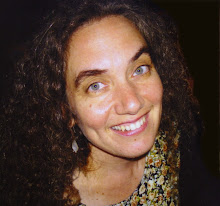
Jhanev Allen Butler
lives in one of the new small homes that have been built in Providence's
Olneyville neighborhood as part of a pilot project meant to show the
long-term viability of "net-zero energy" affordable housing.Jonathan Wiggs/Globe Staff
PROVIDENCE
— The stock version of the American Dream involves a big house with a
white picket fence, a humongous yard, two kids and a dog.
But
for years, Jhanev Allen Butler harbored a different dream, scouring the
country for a home that checked three boxes: affordability,
sustainability, and community.
Now, her dream has come true in Olneyville.
On
Wednesday, Allen Butler stood on her balcony in the Sheridan Small
Homes development, a cluster of five 750-square-foot homes that ONE
Neighborhood Builders has erected on Sheridan Street, between Manton
Avenue and the Woonasquatucket River Greenway bike path.
The
homes are topped by solar panels and were built in a South-facing arc
to maximize solar production. Airtight and well insulated, the
structures meet the “net-zero energy” standard, meaning they produce as
much energy as they consume.
ONE Neighborhood
Builders has completed the Sheridan Small Homes development in
Providence's Olneyville neighborhood as part of a pilot project.Jonathan Wiggs/Globe Staff
The
two-bedroom, 1.5-bathroom homes are being occupied by income-qualified
buyers, with starting price of about $140,000. For example, two of the
homes are reserved for families earning 80 percent of the area median
income, meaning $52,400 for a family of two and $65,500 for a family of
four. And they’re deed restricted, meaning they must be sold to other
income-qualified buyers.
The
homeowners belong to a condominium association, which owns the solar
panels and which ONE Neighborhood Builders manages. Revenue generated
from selling excess energy drawn from the solar panels helps offset
monthly condo fees.
Allen
Butler believes the American Dream is already changing as a young
generation faces the harsh realities of climate change and a housing
crisis that places home ownership beyond the grasp of many young
couples.
“I
think it has begun, with the Tiny Home movement and ‘Tiny House
Nation,’ ” she said. “People are starting to recognize that less is
more.”
Allen
Butler and her husband, Romario Butler, are expecting their first
child, a baby girl, in January, and she’s already looking forward to
walking on the bike path with her daughter.
“It’s exactly what I wanted,” she said. “It’s what I dreamed of.”
But Allen Butler knows full well that these days, finding a dream house can be a nightmare.
As
a clinical psychology graduate student in California, she began
searching for an affordable, “green” house, conducting a comprehensive
search up and down the East Coast. She said she was looking for
something closer to her family in Boston that she could afford while
paying off big amounts of student debt.
Aside from Olneyville, she found just one set of similar homes, outside Atlanta.
Two of the five
Sheridan Small Homes in Providence's Olneyville neighborhood are now
occupied, and closings are expected on two others by the end of
December.Jonathan Wiggs/Globe Staff
The
five homes are bunched together on three-quarters of an acre. But Allen
Butler said she wasn’t longing for a big lawn between her and her
nearest neighbor.
She
said studies done in European countries such as Switzerland and Sweden
have shown that happiness is not correlated with factors such as income
or house size. And while Americans have a tradition of big homes with
gates and fences, she believes happiness stems from a sense of
community.
“I
really wanted to be part of a community,” Allen Butler said. “I get to
talk to the people who are walking by on the bike path. Joggers run by
and say it looks great. People stop and talk to me from my balcony.”
While
it’s far from a “McMansion,” her new home does not feel cramped, she
said. “High ceilings and big windows — that’s the trick,” she said.
The Sheridan Small
Homes development includes a 6-foot-by-6-foot main picture window and
ceilings that slope from 9 feet to 12 feet high.Jonathan Wiggs/Globe Staff
When
her husband grew up in Jamaica, he lived with 15 other people, and in
California, they lived with six other people, Allen Butler said. “We
lived in northern California and saw that housing insecurity was a huge
problem,” she said. “We saw the intersection between houselessness and
racial disparities.”
Small
homes can be a big part of the solution, Allen Butler said, but there
are so many obstacles, including zoning laws. “Counties and cities
prevent you from living in smaller spaces,” she said. “However, there is
so much houselessness that we need those smaller spaces — for a
community, for people to thrive.”
Changing the status quo will require advocacy and new legislation, Allen Butler said. “That is what it will take.”
Sheridan
Small Homes is a pilot project that aims to demonstrate “that it is
economically feasible to build affordable housing to high sustainability
standards and that people want to live in smaller homes,” ONE
Neighborhood Builders said in a written case study of the project.
“I
think we are so much more aware of climate change, and there is a false
dichotomy between building sustainable housing or affordable housing,”
said Jennifer Hawkins, president and executive director of ONE
Neighborhood Builders. “You can and should do both, especially because
of the environmental justice issue. So often, low-income neighborhoods
bear the burden of pollution and all the issues that come with
environmental problems.”
Two
of the five Sheridan Small Homes are now occupied, closings for two
others are expected by Dec. 31, and one more buyer is going through a
mortgage approval process, she said.
But
Hawkins said ONE Neighborhood Builders is interested in undertaking
other small homes development, perhaps in East Providence. “It’s a
matter of finding the right parcel of land that would make sense,” she
said.
Hawkins
said land use regulations can be an impediment to small home projects.
“Luckily, the City of Providence has quite progressive zoning rules, so
we didn’t need a variance,” she said.
But
in some places, land use regulations call for one house per acre, she
said, and while large homes can be gorgeous they are unaffordable to
many people. She said her mother grew up in 900-square-foot ranch house
in Warwick. “We need to go back to building much more modest homes,” she
said.
In
March, House Deputy Majority Whip Mia A. Ackerman, a Cumberland
Democrat, introduced legislation to encourage the building of tiny
homes. The bill would
require towns and cities to allow tiny homes to be used as accessory
dwelling units and to be counted as affordable housing, but the bill
never made it out of committee. The Low and Moderate Income Housing Act
calls for at least 10 percent of the housing in each city and town to be
“affordable,” but many don’t meet that threshold.
While
the obstacles to small affordable housing are higher in suburban
communities, Hawkins said, “I think everyone can agree there is real
power in home ownership, and if we can build more starter homes, more
people will have the opportunity to enter the home ownership market.”
Homes
like Allen Butler’s can have a “huge impact” on the state’s housing
crisis, Hawkins said. “We have to embrace the idea of building smaller
homes in a more clustered fashion,” she said. “I think it is the house
of the future.”

 Posts
Posts


No comments:
Post a Comment