My Abortion at 11 Wasn’t a Choice. It Was My Life.
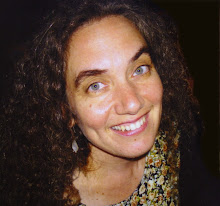
By Nicole Walker
Ms. Walker is a writer and editor who teaches creative writing at Northern Arizona University.
I
predict that my 17-year-old daughter will become a doctor. When my
husband told her about a neuroscientist and nutritionist he met while
producing a documentary, she said, “That sounds like the job for me.”
She knows everything about the gut microbiome, dopamine and herniated
discs. She does not look away at times when others might — like when my
mother unexpectedly texted me pictures of a cyst she had removed from
the back of her head, sitting in a bloody specimen cup. “That’s exactly
what I would do,” my daughter said. “You have to show people.”
I
don’t mind looking at such things, though I would like a little
warning. But here I offer no warning, except to say that in an
alternative world — one without abortion access — that conversation with
my daughter would not have happened. In fact, my family and I would not
have our lives together at all. The loss of Roe v. Wade is collective,
but this story is mine. I ask you not to look away.
In
1982, when I was 10 years old, a 14-year-old boy molested me. He was
supposed to be babysitting me and my younger sisters. After my sisters
went to sleep, the babysitter and I sat on the couch, watching
“M*A*S*H,” which came on after the news. He started caressing my arm.
Then my neck. Then he took off my shirt and my pants. Then his clothes.
He lay on top of me and had intercourse with me. I had a vague idea of
what was happening. My parents had been forthcoming about how babies
were made, and during long and lazy summers in the suburbs of Salt Lake
City, I watched plenty of instructive soap operas.
I
didn’t really know how wrong the babysitter situation was. I was
flattered by the attention, but also confused. Why me? What does this
mean? Was he my boyfriend? Why did we have to keep it a secret?
He
continued to molest me for more than a year. I haven’t always used the
word “molest” — I felt too much guilt and complicity. I am still prone
to feeling both. I’m not sure if that’s a product of the molestation or
if that is my personality, or if the two can even be disentangled.
When
I was 11, he impregnated me. I use this active verb, with me as direct
object, intentionally. To “get pregnant” suggests he threw the baseball
and I, knowing it was coming, caught it. I did not mean to catch
anything, nor did I know how to avoid doing so. My mom, who was already
worried that something seemed wrong, figured it out. “Are you pregnant?”
she asked me. I nodded yes. How did she know? I barely knew. Maybe it
was pure motherly intuition.
In 1983,
abortion was legal in Utah because it was legal across the United
States. I did not feel lucky to get an abortion. I felt like garbage.
The babysitter did not have to go to the clinic. The babysitter was not
shunned and censured by our community. Most people didn’t even know what
he had done, though they seemed to know something bad had happened to
me — or perhaps that I had done something wrong. Only my mom and I were
subject to the shame of entering that special building for that special
procedure. Although no one in the neighborhood or at school talked to me
about it, I could feel the electric gossip surge around me. I
eventually skipped a grade.
In many
parts of the world, the United States included, adult men marry
children, sometimes legally and sometimes not. These girls, some of them
the age that I was when I was molested, are sometimes forced to give
birth. The pelvis can be too small for a fetus to pass through during
birth. The fetus can die. The girl can suffer from a fistula, where the
pressure during prolonged labor creates a connection between the bladder
or rectum and the vagina. Bodily waste can then drip through the
vagina.
Some
abortion rights supporters worry that devoting too much energy to the
stories of young children who need abortions — abortions that are still
legal in at least some U.S. states — narrows the cause. Focusing on
these exceptional cases, they fear, could shift the fight away from a
more expansive battle for women’s rights and the obvious truth that
bodily autonomy should exist for all people.
But
I am telling you all this — even though it hurts to type, even though
when my husband walked by as I was writing this essay, I reflexively
closed my laptop — because the world changed on June 24, 2022. On that
day, I understood the extent of what we were losing.
The
freedom to choose wasn’t what I experienced in 1983. My abortion wasn’t
a choice. It was my life. If I had been forced to give birth, I
wouldn’t be texting my mom from my home in a beautiful mountain town. I
wouldn’t teach at the nearby university. I wouldn’t be working on a book
about climate change and how to shatter predetermined destinies. I
wouldn’t be married to my husband or have my two children. My life would
not have been my own. I would be a prisoner subject to a body’s whims —
and not my body’s whims, but the
whims of a teenage boy who, as best I can tell, experienced no
consequences for inflicting what his body wanted upon my own.
On
June 24, I felt the prison gates fall around me, around my daughter,
around everyone with a uterus. Pregnancy and childbirth change life
trajectories. Now, for many more Americans, trajectories are set. Paths
defined. This future is foreseeable. I ask that you look at it.
Nicole Walker is the author of several books, most recently “Processed Meats:
Essays on Food, Flesh and Navigating Disaster” and “The After-Normal:
Brief, Alphabetical Essays on a Changing Planet.” She edits the “Crux”
series at the University of Georgia Press, is the nonfiction editor at
the journal “Diagram” and teaches creative writing at Northern Arizona
University.

 Posts
Posts


No comments:
Post a Comment