

 Posts
Posts


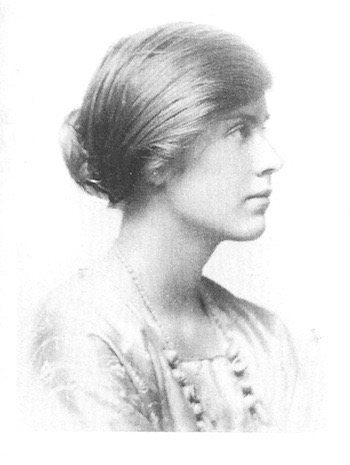 Woman of the Day mathematician and codebreaker Margaret Rock born OTD in 1903 in Hammersmith. Recruited for Bletchley Park in 1940, she was so good at cracking German and Russian codes during WW2 that she stayed on at GCHQ until 1963. She never spoke about her work.
 Margaret was a talented mathematician who was working as a statistician for the National Association of Manufacturers predicting how the economy might change and how businesses would react, when she was tapped on the shoulder in April 1940 for a role that would help the war effort.
She was taken on as a Junior Administrative Assistant at Bletchley Park on 15 April 1940 and assigned to the Section of chief cryptographer Dilly Knox in “a row of chunky converted interlinked houses - just across the courtyard from the main house”, working on German Intelligence Services (Abwehr) Enigma traffic. Dilly was known for greeting new arrivals with the words, "Hello, we're breaking machines. Have you got a pencil? Here, have a go.
" The Germans thought Enigma was unbreakable, and the Abwehr machines were the most secure of all. They were so complex, they didn’t even use a plugboard, a panel with 26 dual-holed sockets in which cables could be inserted to connect letters in pairs thus deciphering the code.
Dilly devised rodding, a method that involved making paper strips emulating the machine’s rotors and comparing them to cribs (known plaintext fragments) so that the strips could be placed in the best starting position to decipher the code. Margaret, who worked with another WOTD, Mavis Batey, was particularly adept at this.
At the end of August 1940, Dilly fired off an internal memo: “Miss Rock is entirely in the wrong grade. She is actually 4th or 5th best of the whole Enigma staff and quite as useful as some of the 'professors'. I recommend that she should be put on the highest possible salary for anyone of her seniority.”
She was promoted to the grade of Linguist on £195 per annum (£9,500 in today’s sterling). Don’t roll your eyes. That was a top salary for a woman in those days, I’ll have you know. Rodding was responsible for the Section successfully decoding a message on 8 December 1941 about the sailing of an Italian battle fleet, which led to the Battle of Cape Matapan off the coast of Greece. It was a resounding Allied victory with heavy losses sustained by the Italians: three heavy cruisers and two destroyers sunk, a battleship and a destroyer damaged, 2,300 killed and 1,015 captured.
Post-war, Margaret stayed on at GCHQ and retired in July 1963 after 23 years service. She died in 1983, aged 80, but there’s an intriguing postscript to her story.
In 1944, Margaret wrote a paper with three other Bletchley Park codebreakers, Mavis Batey, Kevin Batey and Peter Twinn, that was used as a section of Dilly Knox’s official History of Abwehr Codebreaking. The proper name of the paper is ‘GC&CS Secret Service Sigint Vol II: Cryptographic Systems and their Solution’ but it was known to GCHQ staff as “Batey, Batey, Rock and Twinn”. The joke is that it sounded like a firm of solicitors in the Home Counties. The paper was so secret that Mavis, who left Bletchley Park in 1945, didn’t even realise what her own husband did during the war until it was declassified.
“Batey, Batey, Rock and Twinn” was declassified in 2011. Not a typo. 2011.
“Well, as to my adventures on Friday night. I got to Euston by 8.15 - the raids had just started and there were guns beginning, which soon got much louder. There was no train before my 9.50, so I asked a porter where I should wait. He directed me to an archway, a very long one going between the tube station and one of the platforms. The passengers and railway staff (in tin hats) spent all their time there, and it felt very safe, and never shook, however near the bombs…A friendly porter came and told us to come with him if we'd like to see a fire, and from the entrance of the archway there was the whole sky lit up flaming red. It was quite near either St Pancreas or Kings Cross Station.” — Margaret Rock’s letter from Bletchley, September 1940


No comments:
Post a Comment