Saturday, July 29, 2023

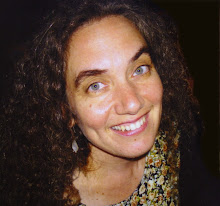
Lauren Hough: a lot of adulthood is pretty disappointing when it turns out it's just like your childhood.

 Sinead.https://substack.com/@laurenhough

Jul 26, 2023

We have a global pastime and it’s not baseball or world cup. It’s building up a woman. Making her a saint. A dirty, sexy saint, ambitious saint. A brave, strong, feisty, filthy saint. A sassy, bossy, bitchy saint. An ethereal, frigid, shrill bitch. A hormonal, bitchy, cunty, ungrateful slut. A bitch. A slut. A cunt.

She shouldn’t have stepped out of line. She was disrespectful. She was ungrateful. She turned her back on her fans. She’s difficult. She’s hard to work with. She’s got big mouth. She should shut the fuck up. She’s unhinged. She’s thin-skinned. She’s crazy. Sure, we care a lot about mental illness, unless a bitch shows a symptom. She outta be slapped.

She’s one stupid broad. I’d kick her ass.

Lauren Hough On Growing Up In A Cult, New Memoir

Lauren Hough tells NPR's Lulu Garcia-Navarro about her memoir Leaving Isn't the Hardest Thing. Hough spent part of her childhood in a cult, which affected her later life.

LULU GARCIA-NAVARRO, HOST:

Lauren Hough grew up in a cult, and not just any cult. It was called the Children of God.

LAUREN HOUGH: It seems shocking from the outside. And I understand how it seems shocking, and that's part of why I wanted to write the book.

GARCIA-NAVARRO: The book is her new memoir, "Leaving Isn't the Hardest Thing." And a warning here - our conversation deals with some of the assault and abuse she writes about.

HOUGH: To explain that if you're in it, that's just your daily life. And for the most part, it's not really as interesting as you'd want it to be. There's a schedule on the wall. Everything's very regimented. There's a schedule for, you know, who's on kitchen duty and then who's sharing God's love with whom on Friday night.

GARCIA-NAVARRO: Sharing God's love is sex, and she describes The Children Of God as a sex cult between and among adults and children. It was also nomadic, which meant that Hough lived in Japan, Switzerland, Germany, around the U.S. - always on to the next place, begging to survive, sexualized at home and regularly beaten for not conforming - nothing stable or reliable.

HOUGH: If you want to drive a dog crazy, you change the rules all the time. And it works with children, too. You never feel completely safe. You never feel completely secure. A lot of that just has to do with the poverty aspect of it, that we never really knew where our next meal was going to come from.

GARCIA-NAVARRO: Which is why Lauren Hough says leaving isn't the hardest thing. Her memoir is a series of searing essays in which she talks about the cult and its influence on her later life.

You write that there's a time period during which children learn to make friends and learn to have a conversation, sort of get an understanding of the social orders and where they fit in in the world. You didn't have that. And so I want to ask you, how did being in Children of God scramble your social senses?

HOUGH: In a word, completely. And it's very small. It's very insulated. So when you come out of that into larger society, you're not supposed to hug strangers. You don't end every conversation with I love you or praise the Lord. So, yeah, it was difficult.

GARCIA-NAVARRO: So tell me about coming out, at least to yourself, in this environment like the Children Of God because obviously, your sexual identity was not something that was welcome or celebrated in this environment.

HOUGH: No, it wasn't. And in some ways, maybe that made it easier to accept it because I was rejecting all of the family's teachings along with it, along with the teachings that I was wrong. It stuck. It takes a long time to get that out of your head that - when you've been raised your entire life to believe that that is wrong and that makes you evil and bad.

GARCIA-NAVARRO: Hough grappled with being gay in a cult that saw her very identity as demonic. But she craved order, and so she ended up in the Air Force. It was, though, under the Clinton-era policy of "don't ask, don't tell," where you could still be discharged for being gay, but only if you came out of the closet.

HOUGH: Yeah. It was not a great time to be gay in the military. I joined a lot of - mostly to get out of Amarillo and to find a way to go to college. But you want that brotherhood. You want that family, that - the camaraderie. You don't get that if you're gay because you can't be really open with your friends. Every conversation from, hey, what'd you do last weekend? is going to be a lie because you have to protect yourself.

The problem with don't ask, don't tell isn't that most people in the military had a problem with being gay. Most of the people my age could not have cared less. But all it took was one person, and one person going to your commander, going to the OSI could ruin a career and did ruin a lot of them. So it was just a constant fear of, you know, if I make this person mad, how are they going to react to it?

GARCIA-NAVARRO: Hough was harassed for being gay, and she was raped by a fellow airman.

HOUGH: I didn't really know what to do with it. I did what I think anyone does with that sort of trauma and just tries to shove it down. And it's manifesting itself in, like, every interaction. I was failing out of school. Air Force had sent me to DLI to learn Vietnamese, and I couldn't remember words. I became profoundly depressed. I didn't know what depression was. The way we depict it, I think, in popular culture, books and movies didn't look like what I felt. I just felt numb. So I didn't know that that was depressed. I just shut off.

GARCIA-NAVARRO: Hough's memoir is about trauma, but not only. It's a sharp and funny take on life on the margins. After being forced out of the Air Force, she experiences homelessness, works in a gay bar.

HOUGH: There's a very us-against-them mentality that happens whenever you're working kitchen jobs, restaurant jobs, bar jobs. And it's a gay bar, so there are all these queer kids whose - I mean, I thought my story was traumatic. Yeah, if you think you have a bad, talk to a few bouncers late at night after they've had a few drinks, and let them tell you how they ended up being bouncers. You see all that laid very bare because we're all too tired to hide it. We'd all experienced poverty. A lot of us were experiencing poverty. You see the breakups and the crying and the hurt and the pain and the I can't pay my rent, and I don't know what I'm going to do next.

GARCIA-NAVARRO: You write, and I'm going to quote here, "we fetishize poverty as though it makes you a better person. The truth is, all it does is make you mean - the constant stress of it, the never-ending shame of it." I'm removing some expletives there.

HOUGH: (Laughter) We are really in love with this bootstraps mentality in America. But how do you go to college when you can't pay rent? Never mind paying for it; it's hard to get home from your second job and study. I admire the hell out of people who do because I couldn't. I was trying to write for 20 years, and it wasn't until I got VA disability that I was able to take enough of a break to have time to write and to have time to think. There's a whole lot of writing that's just staring at the wall. And you need that time to just shut off after work and let things brew. You don't have that time if you're working to survive.

GARCIA-NAVARRO: Yeah, because more things are emergencies, right? It's like, bills, flat tires.

HOUGH: Yeah. I mean, that's how most of us live. We're one, maybe two paychecks away from disaster. What do you do? GoFundMe, I guess. And, I mean, it's kind of sad that we've turned survival into a popularity contest.

GARCIA-NAVARRO: Lauren Hough may be best known for her viral 2018 essay, "I Was A Cable Guy. I Saw The Worst Of America." She wrote in the Huffington Post about all the people she met and the things she saw working installing cable in people's homes while they didn't seem to see her at all.

HOUGH: I think part of it's that you don't read a lot of stories by working-class writers. I mean, every time there's an election, we go into diners to talk to the working class, but nobody ever talks to the waitresses. Nobody ever talks to the cooks. Those are the working poor that we need to be hearing from. People like to tell us what we think a whole lot. And I don't know that most of them have ever talked to us because we're invisible in your house.

GARCIA-NAVARRO: Now, you're a published author. I'm wondering how that sits with you, considering everything you've been through. How does that feel?

HOUGH: The week after publication, I think I had every possible emotion. I did it. I had a moment with my brother on Sunday. I went over to his house. We were sitting out on his back porch, and he looked at me and was like, you're a writer. Yeah. I don't have words for that. It's - I don't know how many people get to live their absolute dream.

GARCIA-NAVARRO: And yet on Twitter, she wrote furiously about a reviewer on Goodreads giving her book only a four-star review out of a possible five. The backlash has been swift, and Goodreads reviewers are calling for her book to be boycotted.

HOUGH: The problem is, I just wrote an entire book about why I talk the way I do and always being told to be more grateful and nicer and they won't hurt you. Speak more softly. Don't say what you actually mean or think. And be very, very careful that it's not misconstrued, or the consequences are pretty dire when you're a kid. So, yeah, maybe I'm more prepared to deal with the consequences now. I just - like I said, I - a lot of adulthood is pretty disappointing when it turns out it's just like your childhood.

GARCIA-NAVARRO: And that's the thing. Lauren Hough is still trying somehow to leave.

HOUGH: (Crying) Why'd you make me cry? It's all right - long day.

GARCIA-NAVARRO: Her book, "Leaving Isn't the Hardest Thing" is out now.

(SOUNDBITE OF CHUCK JOHNSON'S "CALAMUS")

Meditate on the Water vs the People

 warm-ups-santa-clara-2015 (1)

Vice President Kamala Harris arriving in Boston for NAACP convention

NAACP

Vice President Kamala Harris arriving in Boston for NAACP convention

The Convention kicked off earlier this week with theme "Thriving Together.”

NBC Universal, Inc.

Vice President Kamala Harris is coming to the 2023 NAACP National Convention at the Boston Convention Center this weekend.

The Convention kicked off earlier this week with theme "Thriving Together.” The Vice President will be the distinguished guest for a conversation later today.

Organizers are hoping her visit will inspire members to continue fighting for racial justice across the country for generations to come.

Harris made history as the first Black Woman Vice President to provide a keynote speech at an NAACP Convention last year.

Her remarks focused on the Administration’s support for abortion rights and tighter gun restrictions, and conveyed a promise to reduce disproportionately high maternal mortality rates for people of color.

She now joins a list of presidents and vice presidents from Eisenhower to Carter and Bush to Obama to headline the convention over the last one hundred and thirteen years.

For this year's convention, there’s a lengthy schedule of discussions, luncheons and other events over the next few days.


“I'm sick of just liking people. I wish to God I could meet somebody I could respect.” ― J.D. Salinger, Franny and Zooey

teenage colloquial speech of the time

Critical reviews affirm that the novel accurately reflected the teenage colloquial speech of the time.[15] Words and phrases that appear frequently include:

  • "Old" – term of familiarity or endearment
  • "Phony" – superficially acting a certain way only to change others’ perceptions
  • "That killed me" – one found that hilarious or astonishing
  • "Flit" – homosexual
  • "Crumbum" or "crumby" – inadequate, insufficient, disappointing
  • "Snowing" – sweet-talking
  • "I got a bang out of that" – one found it hilarious or exciting
  • "Shoot the bull" "bull session" – have a conversation containing false elements
  • "Give her the time" – sexual intercourse
  • "Necking" – passionate kissing especially on the neck (clothes on)
  • "Chew the fat" or "chew the rag" – small talk
  • "Rubbering" or "rubbernecks" – idle onlooking/onlookers
  • "The can" – the bathroom
  • "Prince of a guy" – fine fellow (however often used sarcastically)

“And I can't be running back and fourth forever between grief and high delight.” ― J.D. Salinger, Franny and Zooey

“Can't no-one compel another man to engage in recreation. Certainly not a son of a gun as ill-humored as yourself.” THE BALLAD OF BUSTER SCRUGGS (2018) TimBlakeNelson TheCoenBrothers

“Make sure you marry someone who laughs at the same things you do.” ― J.D. Salinger, The Catcher in the Rye

“I'd just be the catcher in the rye and all. I know it's crazy, but that's the only thing I'd really like to be. I know it's crazy.” ― J.D. Salinger, The Catcher in the Rye

“All morons hate it when you call them a moron.” ― J.D. Salinger, The Catcher in the Rye

“When you're dead, they really fix you up. I hope to hell when I do die somebody has sense enough to just dump me in the river or something. Anything except sticking me in a goddam cemetery. People coming and putting a bunch of flowers on your stomach on Sunday, and all that crap. Who wants flowers when you're dead? Nobody.” ― J.D. Salinger, The Catcher in the Rye

“People are always ruining things for you.” ― J.D. Salinger, The Catcher in the Rye

“Mothers are all slightly insane.” ― J. D. Salinger, The Catcher in the Rye

“Among other things, you'll find that you're not the first person who was ever confused and frightened and even sickened by human behavior. You're by no means alone on that score, you'll be excited and stimulated to know. Many, many men have been just as troubled morally and spiritually as you are right now. Happily, some of them kept records of their troubles. You'll learn from them—if you want to. Just as someday, if you have something to offer, someone will learn something from you. It's a beautiful reciprocal arrangement. And it isn't education. It's history. It's poetry.” ― J.D. Salinger, The Catcher in the Rye

“What really knocks me out is a book that, when you're all done reading it, you wish the author that wrote it was a terrific friend of yours and you could call him up on the phone whenever you felt like it. That doesn't happen much, though.” ― J.D. Salinger, The Catcher in the Rye

“The apartment below mine had the only balcony of the house. I saw a girl standing on it, completely submerged in the pool of autumn twilight. She wasn't doing a thing that I could see, except standing there leaning on the balcony railing, holding the universe together.” ― J.D. Salinger, A Girl I Knew

The Life and Death of American Cities

 Guest Essay

The Life and Death of American Cities

Richard Ravitch in Albany during his time as lieutenant governor.Credit...James Estrin/The New York Times

Ms. Gelinas is a contributing editor for the Manhattan Institute’s City Journal.

Barely two months before his death in June, at 89, Richard Ravitch, the real-estate developer turned public servant, was doing the same thing he had done regularly for more than six decades: sitting at his desk in a Manhattan office and holding an in-person meeting about the future of his city. Much of Midtown was still empty, but Mr. Ravitch was not the type to work from home.

To get to my last meeting with him, I had to do what has become familiar in New York City over the past few years: walk through an empty lobby and go up an empty elevator. Until the end, even as a younger generation of business people viewed the full-time office as optional — along with Manhattan itself — Mr. Ravitch remained moored to a physical place.

Mr. Ravitch’s office is now empty, too. His absence is a stark reminder that New York’s post-Covid recovery needs new generations of people who are as physically anchored to a city as he was, and who understand that urban civics depends on people in business, finance, politics, policy and media just showing up, day after day, to make a little unglamorous progress.

New York is hardly alone in this need. Many American cities find themselves without patrons who feel their own worth and purpose tied to their hometowns’ fortunes. Cities require successful people to have so much at stake — literally — in a particular place that they can’t walk away. Mr. Ravitch’s death was not just the end of an era in New York — it also laid bare the vacuum that American cities have to fill.

Without Mr. Ravitch’s steady presence, New York City would not have recovered and rebuilt from its 1970s malaise. As a developer, he built thousands of affordable apartments in the ’70s, from Manhattan Plaza, west of Times Square, to the Bronx’s River Park Towers. The middle class was leaving the city — New York City lost nearly a million residents that decade — and the housing Mr. Ravitch built helped New York retain an engaged, committed citizenry and work force.

Image
Mr. Ravitch in his midtown office in 1989.Credit...Marilynn K. Yee/The New York Times

Less than a decade later, as chairman of the state-run Metropolitan Transportation Authority, Mr. Ravitch saved the subways from decades of decay. In an era when both Democrats and Republicans were pushing tax cuts and privatization, Mr. Ravitch persuaded both parties in Albany and the moderate Democratic governor, Hugh Carey, to enact nearly a half-dozen new taxes to fund infrastructure. Though he believed in private enterprise, he knew that private enterprise depended on public works.

Rebuilt subways underpinned New York’s subsequent growth. Annual ridership almost doubled in the nearly four decades before 2019. New York City could not have gained more than 1.5 million new residents and more than 1.3 million jobs over that time without the subways’ capacity to move more people around more efficiently.

Mr. Ravitch was able to do these things — and keep New York from suffering the permanent decline that many American cities faced — in part because of personality: He was affable, he was stubborn, he was convincing.

Image
Mr. Ravitch in Coney Island, Brooklyn, in 1989, greeting voters during his mayoral campaign.Credit...Paul Burnett/The New York Times

But he could not have saved New York City through personality alone, just as one man in an office cannot create an office culture. What about New York’s late-20th-century culture allowed Mr. Ravitch to succeed — and what do cities need today for new Mr. Ravitches to flourish?

In 1975, when New York City nearly went bankrupt, and in 2020, Mr. Ravitch did not see New York City as an asset class, easily traded for a different asset class when times got tough.

Raised on the Upper West Side, and having spent his adulthood on the Upper East Side, he lived nearly his entire life in Manhattan, and never lost that intense connection to place. At the helm of his family development firm in the 1970s, Mr. Ravitch could have pivoted to suburban split levels or office parks. Real estate is real estate. But he could not conceive of abandoning his city.

Mr. Ravitch was not alone in this commitment. A few years later, during the Koch era, New York ignored the bloodless conventional wisdom of the time — planned shrinkage — and invested billions to rebuild the South Bronx.

Contrast that experience with what’s happening in San Francisco right now. Whole Foods, owned by Amazon, opened an outlet downtown in 2022, only to abruptly close it a year later. Westfield, a longtime shopping-mall owner with roots in Australia, abandoned a mall in the same city, handing the property back to its lender.

Multinational corporations owned by global investors have their place in cities; brands bring quality and consistency to everything from drugstores to building management companies. But in a systemic crisis, such as the changes to urban commuting patterns brought on by Covid, dispersed global investors will not save cities.

If deterioration in public safety makes globally branded stores on Chicago’s Magnificent Mile untenable, the stores’ investors will cut their losses and redeploy their dollars elsewhere in the world. If a Portland, Ore., office building owned by a national asset manager is no longer a desired national asset, the manager will give the building back to the bank.

Transient owners must be balanced by a critical mass of business owners who see a specific city as home — the only place they want to be. Without a strong local ownership base to support a city through a crisis, local property stops being a valuable global asset.

Successful cities also need moderately wealthy men and women — the small-scale developers, the mid-tier of corporate executives — who are motivated to engage in public service not because they want something like tax credits, but because they are fed up with their own quality of life.

Mr. Ravitch was wealthy, but his wealth was not so immense that it allowed him to separate himself from New York City’s day-to-day annoyances. “I take the subway at least twice a day,” Mr. Ravitch told reporters upon his 1979 appointment to the M.T.A. He saw for himself the conditions that were causing New Yorkers to leave.

Image
Mr. Ravitch, then the chairman of the M.T.A., with straphangers on the Lexington Avenue subway line in 1980.Credit...Don Hogan Charles/The New York Times

As M.T.A. chair, Mr. Ravitch led people who were richer and more important than he was — top executives of Bear Stearns, MetLife and AT&T — on a 1981 tour of the subways because, he recalled in his memoir, “none of them, I suspected, had ridden a … subway recently.” One of the executives told The Times that he mostly knew of the subways’ woes from “television.”

That kind of distance between the superwealthy and the reality of the streets is evident in San Francisco, which won’t get out of its current crisis of public disorder and population loss if it depends on the affluent tech community to stop erosion. One of Elon Musk’s first acts as the owner of Twitter was to stop paying rent on the company’s San Francisco office. Many tech employees find it easier to leave than to speak up about the city’s problems and take action.

Robust urban culture also depends on influential people who don’t fall for top-down, gimmicky solutions to complex problems. A decade ago, Uber, the global ride-hailing giant, swept down upon supposedly sophisticated cities and promised to relieve traffic through tech. “I want to talk about the future of human-driven transportation,” the Uber co-founder Travis Kalanick glibly said in 2016, “about how we can cut congestion, pollution and parking by getting more people into fewer cars.”

The reality was that Uber was not ride “sharing,” as Kalanick insisted. Uber flooded Manhattan’s streets with tens of thousands of new cars with one passenger each, bringing gridlock to the worst levels on record. Uber also destroyed the city’s decades-old taxi regulation system, which had been created to control the number of vehicles on dense urban streets, forcing New York City to spend the past half-decade painstakingly rebuilding it.

It turned out that the future of human-driven urban transportation wasn’t some global tech gimmick but the local subways instead. In 2017, New Yorkers’ mass civic outrage over a “summer of hell” forced Andrew Cuomo, who was then the governor, to reinvest not in some new thing but in the old thing, underground transit.

Mr. Musk, another placeless individual, has a whole tunneling venture, the Boring Company, that is persuading cities such as Las Vegas to build multilevel underground car-tunnel networks — that is, choosing car sprawl instead of mass transit and density.

The weaker a city’s broader civic infrastructure, the more vulnerable that city is to the flimflam man. Sometimes, the flimflam man’s proffered solution further weakens civic infrastructure. Consider Airbnb, another placeless global tech firm whose executives glibly promised over the past decade to help New Yorkers lower housing costs by enabling them to rent out their spare rooms to earn extra money. The broader reality is that Airbnb has helped increase housing costs by enabling the illegal conversion of tens of thousands of condos and rental apartments into long-term, unregulated hotel suites. Mr. Ravitch’s pursuit of place-centered profit created housing for the middle class; global tech helps push the middle class further out of central cities, and erodes the voter base needed to discipline easily gulled elected officials.

The latest quick fix for New York is a Manhattan casino, with competing real-estate firms insisting that New York’s core, with its copious commercial and entertainment offerings, can’t recover without something it’s never needed before, and something that has failed to revive downtowns from Detroit to New Orleans: transient gamblers.

In the 1980s, Mr. Ravitch was one of the few who saw through that era’s quick-fix gimmick: Westway, a plan to fill in much of the Hudson River along Manhattan’s West Side with toxic landfill in order to make room for a wide interstate highway beneath it and a centrally planned development above it.

Image
Mr. Ravitch speaks to reporters alongside Mayor Ed Koch in 1980.Credit...Neal Boenzi/The New York Times

David Rockefeller, the city’s pre-eminent elite citizen, was an ardent supporter of this plan. Mr. Ravitch knew that it was folly. Manhattan didn’t need more land; it needed to make better use of the land it had.

Mr. Rockefeller had money on his side, but Mr. Ravitch had something more important: political savvy. He helped kill Westway by appealing to the fiscal conservatism of the Reagan administration and telling its leaders that the federal money would be better spent on transit.

Successful cities also need business leaders and other civic-minded individuals who understand state and local politics. In the early 1980s, Mr. Ravitch persuaded Republicans to raise taxes for the subways not by direct virtue of his money but by drawing on the respect he had earned by doing the work to intimately understand the city. He knew what he was talking about, and they knew it.

From transit to policing, much of day-to-day American life happens at the state and local levels. But today’s aspiring political stars of both parties see New York City and San Francisco just as places to raise and give national money.

As all politics becomes nationalized, the political compromises that Mr. Ravitch excelled at become harder. Mr. Ravitch was a Democrat, but he worked with Republicans, including the New York senator Al D’Amato and President Ronald Reagan, because he needed them to help the M.T.A.

Mr. Ravitch wasn’t interested in the thrill of going on national TV to slam the Reagan administration for not caring about cities. Instead, he worked quietly with Mr. D’Amato to convince Mr. Reagan to devote a portion of the gas tax — which Mr. Reagan increased — to transit.

The center must hold not just in politics but also in policy. The apartments Mr. Ravitch built weren’t for the very poor, nor were they built on a free-market basis to command maximum rents. Mr. Ravitch understood that public policy aimed at the broad middle class was sometimes necessary, even if it produced complaints from those above and below. He persuaded Republicans to enact taxes for the subways, yes, but he also annoyed Democrats by raising the transit fare, with the disproportionate burden falling on poorer riders. Today, advocates who focus on utopia — free transit for all, a mass expansion of public housing — may please one another on Twitter, but they get nowhere in practical results.

Successful cities also need strong volunteer and advocacy cultures. Mr. Ravitch gained political support for rebuilding subways not just from powerful executives, but also because of the presence of another critical transit leader: Gene Russianoff of the Straphangers Campaign.

Mr. Russianoff, a Brooklyn native and Harvard Law graduate, could have gone into corporate law and made millions from leveraged buyouts. Instead, beginning in 1978, for $8,300 a year, he built a small but formidable coalition of regular people who, through their cultivation of the press and political staffers, kept pressure on elected officials to improve fellow citizens’ commutes.

Similarly, New York City could not have rebuilt the South Bronx if enough South Bronxites hadn’t stayed and fought, when everyone else was leaving, to ensure that there was something to rebuild. The Bronx needed people like the neighborhood activist Hetty Fox, who, as families were fleeing, began a supervised “play street” for neighborhood children in order to persuade their parents to stay.

Just as effective political appointees such as Mr. Ravitch need support from communities, they need support from politicians. Gov. Carey, faced with Mr. Ravitch’s call to enact new taxes and raise the subway fare, could have hounded him from his position. Instead, he quietly backed his chairman’s unpopular ideas.

The closest recent example of such enlightened local leadership came from the former mayor Michael Bloomberg. Beginning in 2007, his transportation commissioner, Janette Sadik-Khan, began building bike lanes, wider sidewalks and pedestrian plazas to make New York City’s streets safer. That brought widespread press and political ridicule on Mr. Bloomberg, but he steadfastly backed her, and traffic deaths fell.

None of these elements of sturdy urban culture work on their own. Advocacy groups like Straphangers don’t work unless locally focused, broadly distributed newspapers report on their news conferences. Enlightened real-estate developers won’t get far advising City Hall if City Hall is entirely transactional. A policy appointee’s carefully crafted tax package won’t succeed unless an elected official embraces it.

Image
Mr. Ravitch in his office as New York’s lieutenant governor at the Capitol in Albany in 2010.Credit...Nathaniel Brooks for The New York Times

Mr. Ravitch’s death leaves a void. As he co-wrote last fall, “the city faces a bleak future of billions of dollars in lost commercial property tax revenues as companies downsize to meet the needs of employees who may prefer to work at home only a few days a week, or full time.” At the time, New York City office occupancy was around 40 percent; it has since risen, only to about 50 to 60 percent.

New York and similar cities won’t fully recover from Covid population and commuter losses unless it gets the basics right, including order and safety on the streets and reliable public transit. They must do so even as people and money are more mobile than ever, and thus more able to escape state and local tax hikes. As Mr. Ravitch wrote in 2021, “when people have the capacity to work remotely, relocating for tax reasons becomes more feasible. Policymakers should focus on the challenge of keeping capital in New York. There are clear needs for more government spending, and Washington is responding generously, but we can’t recover here without renewed population growth and private investment.”

But the lesson from his accomplishments and advice isn’t that we need a new person just like Dick Ravitch. (Although if a city doesn’t have a cohort of moderately wealthy, civically responsible leaders who walk the same streets as everyone else does, it’s probably in trouble.)

The more acute question is: Does New York’s precarious balance of locally minded wealthy individuals, civically aware property owners, competitive state and local politics and nimble, smart policy advocates still exist to steer the city toward bread-and-butter solutions — fiscal soundness, decent transit, continuity of basic public services — rather than quick fixes? Does that balance exist at all in cities from Portland to Chicago?

Nicole Gelinas is a senior fellow at the Manhattan Institute and a contributing editor of City Journal. Her book on the modern history of New York City transportation will be published next fall.

The Times is committed to publishing a diversity of letters to the editor. We’d like to hear what you think about this or any of our articles. Here are some tips. And here’s our email: letters@nytimes.com.

Follow The New York Times Opinion section on Facebook, Twitter (@NYTopinion) and Instagram.

Nicole Gelinas is a contributing editor for the Manhattan Institute’s City Journal.

The point is not to hold anyone accountable for actual wrongdoing but to parody the process of trying. Michelle Goldberg

a community of trusted collaborators

I really like having a community of trusted collaborators who can help me figure out very early whether material is alive and whether I’m making any egregious mistakes. There is tremendous solitude around writing, and I like that. Most people who write seriously tend to be pretty solitary people. But that does not mean that I can work in isolation and know if what I’m doing is good. I need a community to help me understand what’s working and what isn’t, and I really encourage people to try to find that.

JENNIFER EGAN

Aimlessness, nonattainment, is a wonderful practice. Thich Nhat Hanh