Existential Loneliness hiking with Beauvoir Alessandra Angelini
Oct 26, 2021
I
believe there is a part of each of us that only we can know. This part
is not so deep as to be wholly invisible to others but not so shallow as
to be clear. It requires us to baby it, quell, nurture, and quiet it.
It’s a piece of us that we carry and that carries in return. I’ve
learned to recognize this part in friends, close or otherwise
acquainted. Some people show their secrets easier than others. Some have
this aspect written all over their faces; others reveal it only to some
or don’t show anyone. I find, usually, it’s their deepest desire. It’s
the part of us that requires the most attention and, yet, must be
reasonably ignored. It’s the thing they search for the most but cannot
seem to find. It’s their sadness and their fuel. It’s what they
compensate for. In thinking of mine, it’s an aspect of me that requires
acknowledgment–the occasional gesture towards it, but also must be
quieted before overwhelming me.
The
recognition of this piece of me took time. It has probably been more
apparent to others in my life for longer than it has been obvious to me.
That’s how these things go. It’s always been there, quietly lurking,
singing me to sleep, teasing me. It’s the thing that hurts me the most,
yet through that hurt, heals. It’s my loneliness. And my chosen form of
compensation, the way I quell and baby, is to choose to be alone often.
This
part of me, this alone-prone part, has been the source of most of my
pain and yet, so much of my comfort because I like to be alone. If I pay
too much attention to my loneliness, I hurt. But if I ignore it, I’m
blind. Blind to, what I’ve come to find out is the empowering reason I
do it, not the socially awkward one. Only through recognition of this
part of me have I begun to dance with it, to swing in-step with it. I’ve
learned that my inherent need as a human being to be alone is not a
crippling setback but instead is the forging of my path. It is the
unrelenting pursuit of my life’s meaning.
The
first time I traveled alone, I went to Vienna, Austria. I had been in
Europe for a couple of months and craved a trip outside of France
somewhere unique. I debated between Austria and Wales.
Vienna,
Austria is a small and grey city, or at least when I was there. My two
days were spent under umbrellas and shivering from museums to cafes. The
streets were dim and quiet, with only the sounds of rain and the
occasional pedestrian. Mostly silence echoed. I didn’t bring much with
me but my camera, a few shirts, sweaters, and a pair of black trousers.
By the end of the trip, they all smelled of mildew. Occasionally the
rain would stop, tease me with drizzles, then outpour entirely.
I’ve
become very comfortable in new cities. I find that they have many
things in common, ways to ease the unfamiliarity. It takes practice to
get used to following a map in unknown territory, staring down at your
phone, hoping that the neighborhood becomes what you’d envisioned. I’ve
learned to allow myself a certain comfort level in taking a right or
left turn without knowing what’s down the road. Across from my hotel,
there was a vast park. It was the usual European kind with beige,
sandy-colored gravel, open grass fields, low-hanging trees, and carved
archways with giant statues. Parks are a comfortable and reliable stop
for any cities’ newcomer. Everyone seems to be alone in a park, so it’s
an alone-together kind of place. People there hustled through to their
next destination, took umbrella’d strolls, or sat on benches when the
rain relented. In drier moments, grey-haired men would read newspapers,
teenagers would group, and I would observe and wander.
In
this grey and misty city, I was alone and liked it. But it’s uneasy
traveling alone. Traveling alone means a new occurrence of
inner-monologue. It means talking myself through airports, debating my
hunger, deciding my next stop. Right or left, too early, too late. I
lullaby myself to sleep. It’s not the solitude that stands out to me,
though. It’s the feeling of independence. It’s a state of complete
self-reliance. There’s nowhere to run from me. If I get tired, I have to
sit on a bench and wait for the feeling to pass. If I get hungry, I
have to pray a good spot pops up down the street.
A reliable route to self-information, being alone, and learning to enjoy it can be a path to unlearning loneliness altogether.
To
learn to be alone, Simone de Beauvoir took up hiking. It became,
intensely so, her path to self-information and self-liking. This was the
pursuit of living her existentialist theory–through hiking alone as a
means of rejecting self-pity, pursuing her path, and committing to her
happiness. Existentialism is the belief that a human’s path is
self-proclaimed and self-discovered and that it is every person’s
ethical imperative to find and follow it, at whatever cost. By walking
alone as a reliable way of being alone, Beauvoir claimed her
loneliness–unshackled it and danced with it.
When
I learned about Beauvoir and her hiking, I felt a kinship with her. I
thought back to my trips alone, my lifetime’s worth of feeling by myself
yet drifting always towards me-time. Perhaps being alone, for me, is
existentially necessary. Perhaps it’s my ethical imperative to advocate
for my joy, and after years of trying to deny it, I am potentially my
best when I am with myself. This piece of me, the one that comes in a
different form for each of us, is surely our greatest pain but also our
guiding star. It’s not path-shaking or earth-shattering, but rather is
path-preservation. It’s the reinforcement of what we need the most. It’s
the unshackling and the dancing with our pain to unlearn it.
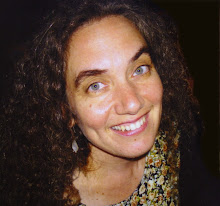
Written by Alessandra Angelini
Writer
and founder of The Workshop Publishers. From the Water is my weekly
newsletter. Here I write personal essays and opinion pieces. Based in
Brooklyn, NY.

 Posts
Posts


No comments:
Post a Comment