Overlooked No More: Hannie Schaft, Resistance Fighter During World War II
She
killed Nazis in the Netherlands and was known as “the girl with the red
hair” on their most-wanted list. Then she was executed.
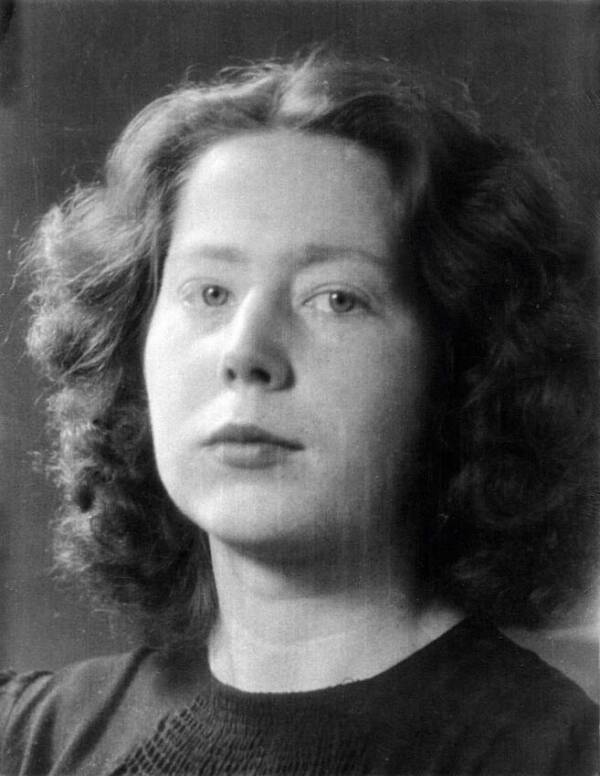
Hannie
Schaft was one of few women to take up arms during the resistance. She
was a student when the Nazis occupied the Netherlands.Credit...Wikimedia Commons
Claire Moses reported this story from Amsterdam and The Hague, using documents from the 1940s at the Dutch National Archives.
This
article is part of Overlooked, a series of obituaries about remarkable
people whose deaths, beginning in 1851, went unreported in The Times.
It’s
April 17, 1945. Two Nazi officers are making a 24-year-old woman walk
ahead of them toward the sandy dunes along the Dutch coast. She’s
wearing a blue skirt and a red and blue sweater.
She
is the Dutch resistance fighter Hannie Schaft, but one might not have
recognized her immediately: Her signature red hair has been dyed black.
As
she walks, one of the officers fires his gun at the back of her head.
The bullet ricochets off her skull and doesn’t kill her. The other
officer then shoots her, also in the back of the head, this time at
closer range.
That
is how Hannie Schaft died, just a few weeks before the end of World War
II in Europe. She had been arrested and sent to a prison in Amsterdam
about a month earlier, during a random check in Haarlem, her hometown in
the Netherlands, when she was found carrying a gun, as well as illegal
newspapers and pamphlets from the resistance movement, in her bicycle
bag. Initially it wasn’t obvious to the Nazis whom they had arrested,
but it soon became evident that it was the woman they had been looking
for, the woman known as the “girl with the red hair,” who had shot and
killed multiple Nazis and collaborators.
She
was born Jannetje Johanna Schaft on Sept. 16, 1920, in a left-wing,
middle-class household, to Aafje Talea (Vrijer) Schaft, a homemaker with
a progressive streak, and Pieter Schaft, a teacher. Hannie, a name she
adopted when she became a resistance fighter, had an older sister,
Annie, who had died of diphtheria. As a result, she had a protective
childhood, said Liesbeth van der Horst, the director of the Resistance
Museum in Amsterdam, which has a display about Schaft that includes her
glasses, a version of the gun she carried, and a photo of her and a
fellow resistance fighter.
“She was a serious, principled girl,” van der Horst said in an interview. “She was a bookworm.”
She added that despite being shy, Schaft “was proud of her red hair” and how it helped her stand out.
After
high school in Haarlem, Schaft studied law at the University of
Amsterdam, in the hopes of becoming a human rights lawyer. She was a
student when the Nazis occupied the Netherlands in May 1940, plunging
the country into war and targeting Jewish citizens. Though Schaft was
not Jewish, the occupation set her on a path to political activism.
“As
the Nazi regime’s policies got harsher against Jews, her own sense of
moral outrage grew stronger,” said Buzzy Jackson, the author of “To Die
Beautiful” (2023), a novel about Schaft’s life. “She started to want to do more.”
She
began volunteering for the Red Cross, rolling bandages and making first
aid kits for soldiers and helping German refugees. When the Nazi regime
required all students in the Netherlands to pledge their loyalty to the
occupiers, Schaft, like many others, refused to do so and was forced to
drop out.
After the Nazis arrested Schaft, she admitted her resistance activities. She was 24 when they executed her.Credit...Wikimedia Commons
She
maintained the friendships she had formed with two Jewish girls at the
university, helping them obtain fake IDs to evade Nazi checkpoints and
hiding them as the Nazis continued stripping Jewish citizens of their
basic rights.
By the end of the war,
more than 100,000 people — nearly 75 percent of all Dutch Jews, the
highest percentage of any Western European country — would be deported
to concentration camps and murdered.
The resistance, van der Horst said, was not one organized movement but rather a tangle of overlapping networks.
Schaft joined the Resistance Council, a communist group, where she met two sisters, Truus and Freddie Oversteegen, who became her close friends and would survive the war. (In March, the Netherlands Institute for War Documentation announced that it had found two letters written by Truus Oversteegen to a friend, in which she mentioned Schaft.)
The
armed resistance was an extremely dangerous undertaking, with many
fighters arrested and executed. It’s unclear how many attacks can be
attributed to Schaft, but researchers say there were at least six.
In
June 1944, Schaft and a fellow resistance fighter, Jan Bonekamp (with
whom she was rumored to have had a romantic relationship), targeted a
high-ranking police officer for assassination. As the officer was
getting on his bicycle to go to work, Schaft shot him in the back,
causing him to fall off the bike. Bonekamp finished the killing but was
injured doing so. He died shortly after. Schaft managed to escape on her
own bike, which was how she got around doing her resistance work.
Schaft
was also involved in killing or wounding a baker who was known for
betraying people, a hairdresser who worked for the Nazis’ intelligence
agency, and another Nazi police officer.
Before
confronting her targets, Schaft put on makeup — including lipstick and
mascara — and styled her hair, Jackson said. In one of the few direct
quotations that have been attributed to Schaft, she explained her
reasoning to Truus Oversteegen: “I’ll die clean and beautiful.”
Dawn
Skorczewski, a lecturer at Amsterdam University College, said Schaft’s
involvement in the resistance was particularly extraordinary because few
women in the movement took up arms.
“It’s unusual that a woman of her age would start killing Nazis in alleyways,” she said in a video call.
Once
the Nazis started looking for “the girl with the red hair,” as she was
described on their most-wanted list, Schaft disguised herself by dying
her hair black and wearing wire-frame glasses.
The
Nazis raided Schaft’s parents’ house and arrested them, hoping that she
would turn herself in, but they were released nine months later,
according to the Resistance Museum.
After
Schaft was caught, she admitted her resistance activities. But there is
no evidence that she gave the Nazis information about any of her fellow
resistance fighters.
After the
liberation of the Netherlands on May 5, 1945, Schaft’s body was dug up
from a mass grave with hundreds of other people the Nazis had executed.
She was the only woman among them.
Later
that year, she was buried at the Honorary Cemetery in the seaside town
of Bloemendaal, alongside hundreds of other resistance fighters. Queen
Wilhelmina of the Netherlands attended the service, according to
documents in the Dutch National Archives.
Schaft’s
name is well known in the Netherlands. There are streets and schools
named after her, and in 1981 she was the subject of a scripted movie
called “The Girl With the Red Hair.” (Janet Maslin panned the film
in The New York Times, writing that Schaft’s story “was undoubtedly
more exciting in reality than it is on the screen.”) An Amsterdam-based postproduction company is planning to polish the original film and rerelease it for the Netherlands Film Festival in September.
Her
story is still being uncovered by researchers — a challenging task
because resistance fighters worked undercover and often left little
evidence behind.
As Jackson, the author of “To Die Beautiful,” noted, “The reason we know about Anne Frank is because she left a diary.”
Schaft,
on the other hand, made it a point not to put anything in writing.
“That’s true for most people in the resistance,” Jackson said. “There
are not a lot of records to look at.”

 Posts
Posts




No comments:
Post a Comment