
 Posts
Posts


President Donald Trump has the power to end a civilization. But it’s not Iran’s. It’s America’s.
As an Iranian American born and raised in the United States, I love both my homelands equally and unreservedly. But I’ve never worried more about America or less about Persian civilization.
Because even if Trump demolished every building in all of Iran and killed every living Iranian, he couldn’t come close to destroying Persian civilization. Not just because it’s thousands of years older than these disturbingly divided United States I call home, but because Iranians don’t take pride in buildings or big, beautiful bills. We take pride in the whole of Persian architecture and the Cyrus Cylinder. We are not impressed by Dr. Phil or Kid Rock or Trump for that matter. We are the descendants of the poets Rumi, Hafez, Saadi and Ferdowsi. We have no interest in being timely; we’re perfectly happy being timeless. So we don’t think in years or decades or even centuries. We think in millennia. And that’s why I’m not even remotely worried about the survival of Persian civilization.
American civilization, however, is another story. For I worry about it every day. Because I see our greatest asset as a nation of immigrants slipping away.
Like countless American immigrants, my parents came to the United States for a better life, and they succeeded spectacularly. Living embodiments of the American dream and Iran’s post-revolutionary brain drain, they both practiced medicine in Ohio for decades while raising two daughters to believe that anything was possible in America. And we did.
My sister, the smartest, became a doctor and a mother. I, the loudest, became a lawyer and a writer. By all accounts, our family is proof that America is an extraordinary country, full of freedoms and opportunities that evade so many around the world. But Trump’s America has not been kind to immigrant families like ours, who have worked hard to better this country only to feel increasingly isolated within it.
For families like ours, Trump’s bombast is ominously reminiscent of the autocracies we fled. Every time he demeans or deports our fellow Americans in service of his white, pseudo-Christian, nationalist agenda, our country and our people suffer. As eerily familiar as it feels to see the U.S. flirt so shamelessly with theocracy and dictatorship, I know this is different.
For unlike Iran, America doesn’t have thousands of years of history to reassure us that our civilization will survive. Because we are building it as we go. As a country born of genocide and built by slavery, the true patriots among us know that our greatest strength and salvation lie in our diversity. Trump’s refusal to acknowledge our history or celebrate our diversity represents nothing short of the greatest threat to American civilization since the Civil War. And his insistence on cutting funding for pretty much everything that creates and sustains a civilization — including the arts and sciences, the humanities and health care, the environment and education — doesn’t bode well for our nascent nation.
Ultimately, for American civilization to last even a tenth as long as Persian civilization, Americans must elect leaders who truly put America first. Not as some collection of embezzled real estate holdings meant to boost the egos and pockets of tyrants, but as one of the most diverse and vibrant civilizations this side of the 21st century.
For we are the descendants of Walt Whitman and Emily Dickinson, Henry Wadsworth Longfellow and Audre Lorde, Paul Laurence Dunbar and Edgar Allan Poe, Henry David Thoreau and Maya Angelou. These poets alone have given us more than enough upon which to sustain a civilization. But only if we can pull away from our screens long enough to quit thinking in seconds and 24-hour news cycles. Because to survive, Americans must stop surrendering to political hubris and cultural amnesia. To survive, we must start thinking in millennia.
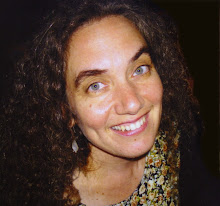
Melody Moezzi, a Chicago native, is an author, attorney and activist. Her latest book is “The Rumi Prescription,” and her forthcoming book is “Maybe Let’s Not: Adventures in Deleting Delusions, Refreshing Reality, and Living Life in Real Life.”


No comments:
Post a Comment