

 Posts
Posts


Saturday, May 03, 2025


Bonnard's paintings divided his two contemporaries. Picasso privately expressed frustration at Bonnard’s constant need to revise, saying: ‘Painting … is a matter of seizing the power’. Matisse, however, appreciated ‘the full depth of his expression’ and called Bonnard ‘one of the greatest painters.’
Authoritarianism depends on obedience. On predictability. On fear. It’s a performance of control, puffed-up and insecure. All bluster, no soul.
In Nazi munitions factories, enslaved workers—risked death to “short the powder.” They would subtly weaken the explosives, sabotage bullets, or alter chemical compounds just enough so the munitions failed at critical moments on the battlefield. It was invisible resistance. Quiet. Subversive. Brave.
Today, we face a different kind of fascism. It is rooted in the same white grievance and Christian nationalism. Sickeningly, it wears a US flag pin and talks about “freedom” while banning books, criminalizing dissent, shitting on due process, and eroding the foundations of democracy in broad daylight. It has spread like a virus—through media echo chambers, weaponized religion, and performative cruelty.
So what do we do? March? Vote? Scream? Yes—and. We short the powder.
Each in our own ways, we undermine their machinery not with grand gestures but with persistent, deliberate acts of defiance:
• A teacher who refuses to erase queer authors from their syllabus.
• A pastor who preaches prays for justice in the capital rotunda.
• A small business owner who hires the immigrant, the ex-felon, the trans kid.
• A CEO who won’t donate to political action committees that fund hate.
• A parent who teaches their kids to question, to empathize, to think critically.
This is the resistance they can’t see coming. Because it looks like daily life.
Shorting the powder means refusing to play by their script. It means using your role—your workplace, your art, your money, your relationships—to interrupt their momentum. Not with slogans, but with strategy. With imagination. With subversive joy.
Teach the banned book. Platform the unheard voice. Fund the thing they fear. Mock the sacred cow. Write the joke they don’t want told.
Authoritarianism depends on obedience. On predictability. On fear. It’s a performance of control, puffed-up and insecure. All bluster, no soul.
So what happens when the gun fires a dud?
What happens when the strongman’s threat lands with a thud—because the people he tried to scare, shame, or silence just… don’t play along?
That’s the real power move: exposing the bluff. Making the performance limp. No powder in the bullet. No fuel for the fantasy. Just an empty show of dominance with nothing behind it.
That’s what creative resistance does. It doesn’t just protest—it emasculates the illusion. Not with violence, but with intelligence. With humor. With refusal.
Because if their whole identity is built on control, then the most subversive thing you can do is show they don’t have it.
Make them look ridiculous. Make them irrelevant. Make their threats land like blanks.
No powder in the bullet. No fear in your heart.
Rhythmic Breathing in Swimming
Many scientific tests have proven that breathing relieves stress. This calms you and improves your mental clarity, focus, and concentration.
Deep breathing is one of the best antidotes to stress there is. It counteracts stress by triggering the relaxation response. Deep breathing pulls back the reins on the body’s physical stress response including increased heart rate, fast breathing, and high blood pressure. Breathe deeply, and the body receives a message from the brain that all is well — it’s safe to relax.
The Simple Act of Breathing
One day, I suspect, breath will no longer be a quiet background act. It will be the whole story—the work, the focus, the prayer. What we ignored will become what we fight for. And so, I ask myself now: why wait for crisis to revere the ordinary? The breath—slight, constant, unnoticed—is the oldest companion I have. It has never left me, though I have left it a thousand times in my hurry. If I learn to greet it now, not just as function but as gift, perhaps the world will slow its spinning. Perhaps the ground will feel steadier. Each breath, after all, is a threshold: in, out, begin again. Gratitude doesn’t live in the extraordinary. It lives here, in the quiet inhale I almost forgot.
There will come a time when the simple act of breathing, once so easily forgotten, so taken for granted, will become the most important, most essential task we have. If I can treat breath like that now, I believe it will slow things down to their proper pace and perspective. In that light, breath is the daily birthplace of gratitude; the rooted continuum of presence. Justin Foster
We should always be ready. We should always be humble.
The highest kind of writing—which must not be confused with the most ambitious kind…belongs to the realm of grace. Talent is part of it, certainly; a thorough understanding of the secret laws, absolutely. But finding the subject and theme which is in perfect harmony with your deepest nature, your forgotten selves, your hidden dreams, and the full unresonated essence of your life—now that cannot be reached through searching, nor can it be stumbled upon through ambition. That sort of serendipity comes upon you on a lucky day. It may emerge even out of misfortune or defeat. You may happen upon it without realizing that this is the work through which your whole life will sing. We should always be ready. We should always be humble. Creativity should always be a form of prayer.
BEN OKRI
“Stories can conquer fear, you know. They can make the heart bigger.”
―
― The Famished Road
― Astonishing the Gods
―
― The Famished Road
― The Famished Road
―
―
Seven Lakota Values: Generosity, Kinship, Fortitude, Wisdom, Prayer, Respect, Compassion
Wačháŋtognaka — Generosity
The Lakota word for generosity, means to contribute to the well-being of one's people and all life by sharing and giving freely. This sharing is not just of objects and possessions, but of emotions like sympathy, compassion and kindness. It also means to be generous with one's personal time.
Giveaways have always been part of Lakota society. At important events, the family gathers their belongings and sets them out for any person in the community to take. “What you give away, you keep; what you keep you lose” is an old Lakota saying.
Wótakuye — Kinship
The Lakota word for kinship, is one of the important values coming from the thiyóšpaye — extended family. It includes the ideas of living in harmony, belonging, and as the true wealth and the importance of trusting others. It is one of the values that made the thiyóšpaye work.
For a Lakota, you belong to a thiyóšpaye through birth, marriage or adoption. Your family even extends out to your band and the whole Lakota nation. Whenever you travel somewhere, you can expect to be welcomed and supported as if you were in your own immediate family.
The Lakota were a warrior and hunting society. This meant the men might not return when they went out to fight or to hunt. So, wótakuye ensured the women, children and elders would not be left alone. In these times, generosity was the way of life, and resources were meant to be shared.
Wowačhíŋtȟaŋka — Fortitude
The Lakota word for fortitude, means facing danger or challenges with courage, strength and confidence. Believing in oneself allows a person to face challenges. Fortitude includes the ability to come to terms with problems, to accept them and to find a solution that is good for everyone.
Historically, one of the first lessons a Lakota child learned was self-control and self-restraint in the presence of parents or adults. Mastery and abilities came from games and creative play. Someone more skilled than oneself was viewed as a role model, not as a competitor. Striving was for achieving a personal goal, not for being superior to one's opponent. Success was a possession of the many, not of the few.
Wóksape — Wisdom
The Lakota word for wisdom. The knowledge and wisdom of elders are very important for the well-being of the Lakota people. This is understood to be something sought and gained over the course of one's entire life.
Wisdom has to do with understanding the meaning within natural processes and patterns. It means knowing the design and purpose of life.
It also has to do with understanding and living the spiritual values and beliefs upon which one's culture is founded and being able to share these with others. Wisdom means being able to incorporate the sacred way of life into one's own life and to respect and honor all life. It means being open to the dreams of the day and the night when spiritual direction may come to a receptive child or adult seeking wisdom.
Wóčekiya — Prayer
The Lakota stress the importance of speaking directly to Tȟuŋkášila — Creator, and to having a close and open relationship with Wakȟáŋ Tȟáŋka — Great Spirit.
They believe Mother Earth is sacred, and so they honor and respect her greatly. They give thanks to the Creator daily through living consciously and by praying to the Great Spirit. The Lakota people believe that the land does not belong to them, but rather that we belong to the land. As such, they recite daily prayers of thanks to Mother Earth and the Great Spirit for all they continue to bless us with and for the great privilege and honor of life.
Waóhola — Respect
Respect for the self, family, community all life. For people to live together in peace, they have to respect one another. The old are respected for their wisdom, and the young are respected because they are the people’s future. This attitude also means reverence for all other living things in the world.
Wówauŋšila — Compassion
Compassion and care for all especially the old ones, the young ones, those in mourning, those who work helping the people. Care for others as you would yourself because we are all part of this circle of life. Compassion is important to the Lakota people, as they all work together and lean on one another for support and survival. This includes following the values each day and including everyone in daily wóčekiya — prayers.
https://www.stjo.org/native-american-culture/native-american-beliefs/seven-lakota-values/
The Meaning of the Four Directions in Native American Culture
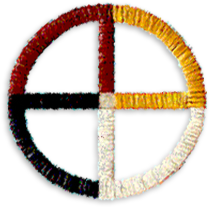
As part of the Lakota culture, when people pray or do anything sacred, they see the world as having Four Directions. From these Four Directions — west, north, east, south — come the four winds. The special meanings of each of the Four Directions are accompanied by specific colors, and the shape of the cross symbolizes all directions. Like many Native American beliefs and traditions, specific details regarding colors associated with directions varies.
West (Black)
To the west, the sun sets, and the day ends. For this reason, west signifies the end of life. As Black Elk says, “… toward the setting sun of his life.” The great Thunderbird lives in the west and sends thunder and rain from its direction. For this reason, the west is also the source of water: rain, lakes, streams and rivers. Nothing can live without water, so the west is vital.
North (Red)
North brings the cold, harsh winds of the winter season. These winds are cleansing. They cause the leaves to fall and the earth to rest under a blanket of snow. If someone has the ability to face these winds like the buffalo with its head into the storm, they have learned patience and endurance. Generally, this direction stands for hardships and discomfort. Therefore, north represents the trials people must endure and the cleansing they must undergo.
East (Yellow)
The direction from which the sun comes. Light dawns in the morning and spreads over the earth. This is the beginning of a new day. It is also the beginning of understanding because light helps us see things the way they really are. On a deeper level, east stands for the wisdom helping people live good lives. Traditional people rise in the morning to pray facing the dawn, asking God for wisdom and understanding.
South (White)
Because the southern sky is when the sun is at its highest, this direction stands for warmth and growing. The sun's rays are powerful in drawing life from the earth. It is said the life of all things comes from the south. Also, warm and pleasant winds come from the south. When people pass into the spirit world, they travel the Milky Way's path back to the south — returning from where they came.
Adapted from Lakota Life by Ron Zeilinger
https://www.stjo.org/native-american-culture/native-american-beliefs/four-directions/
Friday, May 02, 2025
"Sparrows," by Bill Holm
Poem: "Sparrows," by Bill Holm, from The Dead Get By With Everything (Milkweed).
SparrowsMorning after first snow—
outside my kitchen window,
gray sparrows flap up
and down on a sagging clothesline.
It is a corn dance
in honor of sunshine on snow.What joy in a sparrow's body
as he jumps and eats—
a world of red barns,
snow, old clotheslines
and corn kernels is enough.
No brooding on hunger and death,
no suspicion among the sparrows.I return from seeing a woman,
full of joy and dancing in my body—
I lie awake all night
putting away old dreams like a man
packing for a long trip.Now it is clear: her face
comes to me, and I sink
into sleep like childhood,
rising hours later to bright sun,
sparrows dancing on the clothesline.In a world of grief, no one
has any right to such gifts
as I am given; I take them,
put on my feathers, and go
dance in the snow.