An adult "stuck" at a young age is often experiencing arrested emotional development or involuntary regression, where trauma or deep emotional wounds freeze development at that age. This can cause childish behavior patterns to reappear during times of stress, trauma, or lack of autonomy, requiring therapy to address the root causes.
Key aspects of this phenomenon include:
Trauma Response: Unhealed trauma, particularly from childhood, can prevent emotional maturity, causing a "freeze" response where the individual reacts to life's challenges from the emotional capacity of that earlier age.
Age Regression triggers: These incidents often occur when the individual feels unsafe, overwhelmed, insecure, or re-traumatized, leading to behaviors that resemble a younger child.
Dependency and Responsibility: The individual may struggle with self-trust, autonomy, and accepting responsibility for their life, often relying heavily on others for support.
Treatment: While it can feel hopeless, specialized therapy is necessary to help the individual process these "stuck" emotions and build tools to function as a mature adult. If this behavior is sudden or accompanies memory loss, it could also be a symptom of a neurological condition, such as dementia.
The arrival of the vernal
equinox marks the beginning of astronomical spring across the Northern
Hemisphere, bringing increasing amounts of daylight and warmer
temperatures.
In 2026, the equinox officially takes place on
Friday at 10:46 a.m. EDT, when the sun is positioned directly above
Earth’s equator.
At this moment, parts of the planet experience
nearly equal amounts of daylight and darkness, with roughly 12 hours of
sunlight and 12 hours of darkness.
From this point forward, daylight will
continue to significantly increase in the Northern Hemisphere through
the summer solstice.
Astronomical spring differs from meteorological spring, which is the
time period used by climatologists and forecasters for seasonal
record keeping and analysis.
Meteorological spring began on March 1
and runs through May 31, while astronomical spring began on March 20
and continues through June 21.
Astronomical seasons are based on
Earth’s position relative to the sun, while meteorological seasons
follow a consistent three-month calendar.
The fixed nature of the
meteorological calendar allows researchers to more easily compare
temperature and climate data from previous years.
No matter
whether the astronomical or meteorological calendar is used, the growing
daylight is noticeable, with earlier sunrises and later sunsets
becoming more pronounced, with each day gaining roughly two minutes of
additional sunlight.
Despite the milestone, cold air intrusions
remain possible, as spring is the second-coldest season of the year due
to a lag between the increasing angle of the sun’s rays and warming
temperatures.
Earth’s tilt has the greatest impact on the seasons, rather than the distance between the Earth and the sun.
The
globe is actually closest to the sun in early January, a point known as
perihelion, while the planet is farthest from the sun in early July,
which is called aphelion.
During the perihelion stage, North
America typically experiences its coldest temperatures of the year,
while the opposite is true during summer, when the warmest conditions
occur even as the planet is the farthest from the sun.
The gradual increase of sunlight will continue until the summer solstice in June, which is the longest day of the year.
The
shortest day of the year across the Northern Hemisphere occurs on the
winter solstice which annually takes place on Dec. 21 or 22.
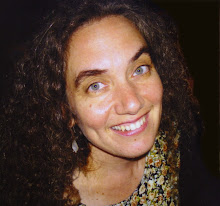
Shannon McDermott of
Burlington, Vt., played a mock tour guide for ICE Tours VT, a group
staging a mock tour of US Immigration and Customs Enforcement-related
sites. The project uses guided tours and scripted elements to explore
themes of immigration enforcement and public perception.Oliver Parini for The Boston Globe https://www.bostonglobe.com/2026/03/19/metro/ice-tours-vermont-surveillance/
BURLINGTON, Vt. — They didn’t come for the fall foliage, or the skiing — not even for the freshly boiled maple syrup.
Instead of the natural wonders of the Green Mountain State,the
two-dozen people who gathered for a bus tour Tuesday in this city’s
tourist hot spot had come to see an unwelcome transplant to Vermont— ICE, and not the frozen kind.
“Good
morning and welcome to the first-ever tour of a brand-new tour company:
ICE Tours VT,” one of the hosts said through a microphone. “My name is
Barb, and I’ll be your tour guide today.”
Her name was not Barb, and this was not a tour companyof
any vintage. Rather, it was an elaborate work of performance art
designed to bring attention to one of Vermont’s least-known specialties:
hosting facilities for US Immigration and Customs Enforcement and other
branches of the Department of Homeland Security.
Despite its liberal reputation, the state has become home in recent decades
to a large number of DHS facilities, including surveillance centers
that fuel its immigration enforcement actions throughout the country.
For
the next few hours, “Barb” — real name Shannon McDermott, 58, of
Burlington — would lead a group of activists posing as tourists from one
government facility to the next. She and her fellow actors would read
from cue cards, cataloguing the harms they believe the Trump
administration’s immigration enforcement apparatus is causing the
nation.
They’d
pose for photos outside ICE offices, at one point donning giant
inflatable eyeballs to pantomime the spying they said was taking place
inside.
Participants set up for a performance art event organized by ICE Tours VT in downtown Burlington.Oliver Parini for The Boston Globe
This
was an elaborate stunt. As the “tourists” prepared to board a pair of
rented minibuses, they perused custom-made merchandise and
professionally illustrated maps and brochures displayed on an info table
in the middle of a pedestrian walkway. Everything, buses included, was
emblazoned with the fake company’s fake logo: a masked man wearing an
ICE hat next to an outline of Vermont. Each tourist adopted an assumed
identity, with name tags and occasional bits of scripted dialogue.
Organizers had been building hype for the project for weeks, taking out an ad in a local newspaper that led readers to an ICE Tours VT website. A video crew was on hand to gather footage intended to go viral.
Behind
it all was Blaine Paxton, 56, of Burlington. A supply chain management
consultant, Paxton had recently helped convince officials in nearby
Williston to issue a condemnation of ICE — even though the agency employs hundreds of people in town.
Activists in Vermont have been protesting the federal outposts for years, but Paxton said he was looking for a more creative way to raise awareness.
“The goal is for the public to take action against these facilities,” he said.
Quinn Rol of
Burlington read trivia questions on a minibus for ICE Tours VT, a group
staging a mock tour of Immigration and Customs Enforcement sites.Oliver Parini for The Boston Globe
As it has in Minnesota, Maine, and other states, ICE has drawn a higher level of scrutiny in Vermontsince an enforcement action last week led to a violent protest
in neighboring South Burlington, replete with pepper spray and
flashbang grenades. The incident culminated with ICE storming a home,
assisted by state and local police, and detaining three undocumented
people hiding inside —none of whom were apparently the target of the original enforcement action.
Coincidentally,
one of those detained, Christian Humberto Jerez-Andrade, was due for a
hearing Tuesday morning in federal court one block away from where the
mock tourists assembled. That led to an unexpected interaction near the
ICE Tours VT info table when a protester en route to Jerez-Andrade’s
hearing stopped to chide the tourists for their choice of tactics.
“Instead
of, like, performatively trying to get a clip on TV, maybe you should
consider going right now to go support and help them,” the activist told
the crowd before walking away in a huff.
“Thank you so much,”said McDermott, who promptly returned to character as Barb and to her script for the ICE tour.
Shannon McDermott plays a mock tour guide named “Barb” for ICE Tours VT.Oliver Parini for The Boston Globe
The
participants, bundled up for a blustery, late winter morning, crossed a
street and crammed into the minibuses. As they zipped around the
suburbs and business parks of Chittenden County, McDermott and fellow
tour guide Sam — real name Quinn Rol, 36, of Burlington — shared the
history of ICE’s outsize presence in Vermont.
Starting in the early 1990s,
then-senator Patrick Leahy began steering funding to his home state for
what was known at the time as the US Immigration and Naturalization
Service. As he rose through the ranks of the Senate Appropriations
Committee, the veteran Democrat brought more money, and more government
facilities, to Vermont.
They now include ICE’s Law Enforcement Support Center, which helps the agency share intelligence with local police around the country, and the National Criminal Analysis and Targeting Center, which surveils social media
and mines other data to track people ICE is seeking to deport.
According to ICE Tours VT, Homeland Security operates at least eight
sites in the area, making it one of the county’s largest employers.
Public
knowledge of what goes on inside some of these outposts is limited. At
one nondescript office park in South Burlington, the tour guides hopped
out of the buses to describe what little they knew about what they
referred to as “the mystery site.”
“This
building is unmarked and there are no references to it on the DHS
website,” McDermott said, feigning ignorance and surprise. “Employees
here say they can’t tell anyone what the operation is that’s going on
here. Security is so strict, lunch deliveries are not even allowed.”
McDermott gasped, leaning into her dopey persona as Barb the tour guide.
“How am I going to get my acai bowl?” she asked.
Participants gathered in front of an ICE National Criminal Analysis and Targeting Center in Williston, Vt.Oliver Parini for The Boston Globe
A mock "tourist" held a brochure for ICE Tours VT.Oliver Parini for The Boston Globe
As
Rol walked into the vestibule to investigate further, security officers
disappeared and workers on the building’s first floor drew their
blinds.
“It looks like there’s no one who wants to talk to us,” he reported upon reemerging.
Homeland Security and ICE did not respond to requests for comment about the bus tour or the the South Burlington site.
Between
stops, the guides held an ICE trivia quiz, awarding a toy Blackhawk
helicopter and a pair of handcuffs to the winners, and engaged in
scripted banter. After telling her passengers to refrain from chewing
gum or eating candy on the bus, McDermott began munching conspicuously
on something she had slipped into her mouth.
“I’m
sorry. Did you think those rules are for everyone?” she said. “Some
rules are for you, and some rules are for me. ICE could teach you that
rules aren’t for everyone.”
At
the Law Enforcement Support Center in Williston, Paxton helped unfurl a
banner featuring the phone number for a national ICE tip line. Calls
are answered at the center and, last fall, it sought to hire 100 new customer service representatives.
McDermott
encouraged the traveling crew to call the tip line and report “the
worst of the worst” criminals. One suggested dropping a dime on White
House Deputy Chief of Staff Stephen Miller.
Down the road, at the National Criminal Analysis and Targeting Center, also in Williston, McDermott noted the facility was expanding its use of artificial intelligence
for surveillance. Organizers handed the passengers giant inflatable
eyeballs and asked them to pose for a group photo in front of the
center’s tinted windows.
“Everybody
face the parking lot and just put those eyes right in front of your
face, if you would,” she said. “Yeah, make it look like you’re looking
around — looking around with your big eyeballs, spying on the world.”
“Everybody say, ‘Visine,’ ” someone suggested.
“Visine!” the crowd shouted in unison, eyeballs aloft.
Near
the end of the tour, Maryann Bock, 73, of Burlington, said she hoped
ICE Tours VT would “bring the facts to the forefront” to those unaware
of the agency’s sprawling activities, in Vermont and beyond.
“The
larger hope is that this kind of information gets spread throughout the
country,” she said. “And events like this get repeated throughout the
country to make people more aware of facts — not just ‘ICE out’ signs.”
As
for whether ICE Tours VT would continue operating after its debut,
Paxton said more than 100 people had already signed up on its website.
“We’ve been surprised by the level of potential demand for this kind of tour,” he said.

 Posts


