
 Posts
Posts


“Endurance is not a young person’s game. I thought I might even be better at 60 than I was at 30. You have a body that’s almost as strong, but you have a much better mind.”
[...]
Swim practice also removed Nyad from her house, enabling her to avoid her father (actually, her stepfather, though Nyad didn’t know that as a child), a mercurial figure who read Nyad “The Odyssey” and woke her at 3 a.m. to see a full moon, but who could also make family life unpleasant. “In the water I felt safe,” Nyad told me. There, she was also protected from the sexual abuse she says she experienced in her high school years. “I was 14 all the way through 17. I was stronger than I am now, and I didn’t stop it. I didn’t slap him or throw him against the wall or go . . . to my mother.”
To cope with the pain, Nyad became obsessed with survival stories: those of polar explorers Roald Amundsen and Robert F. Scott, along with David Howarth’s “We Die Alone,” the story of a Norwegian man crushed by an avalanche who spent days buried under several feet of snow and who cut off his own frostbitten toes to avoid gangrene. As Nyad writes in her 1978 memoir “Other Shores,” she sought to learn from these epics how “to dig deeper and deeper into your gut until you arrive at that same core of pride and dignity that the survivors know.” Nyad chose the water as her medium. “At 16,” she writes, “I was not the best in the world, but I was damn good.”
At 60, Nyad wanted to feel damn good again. “People ask: ‘What’s in it for you? Is it all masochism? Is it just that it feels bad and then good to be done?’ No,” Nyad says. “When I’m out there, I’m thinking to myself: I’m a rare breed. There aren’t many people in the world who can do this.”
Article
Saturday, February 04, 2017
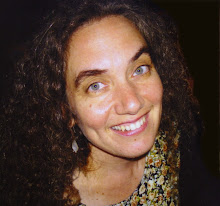
Marathon Swimmer Diana Nyad


Subscribe to:
Post Comments (Atom)
No comments:
Post a Comment